
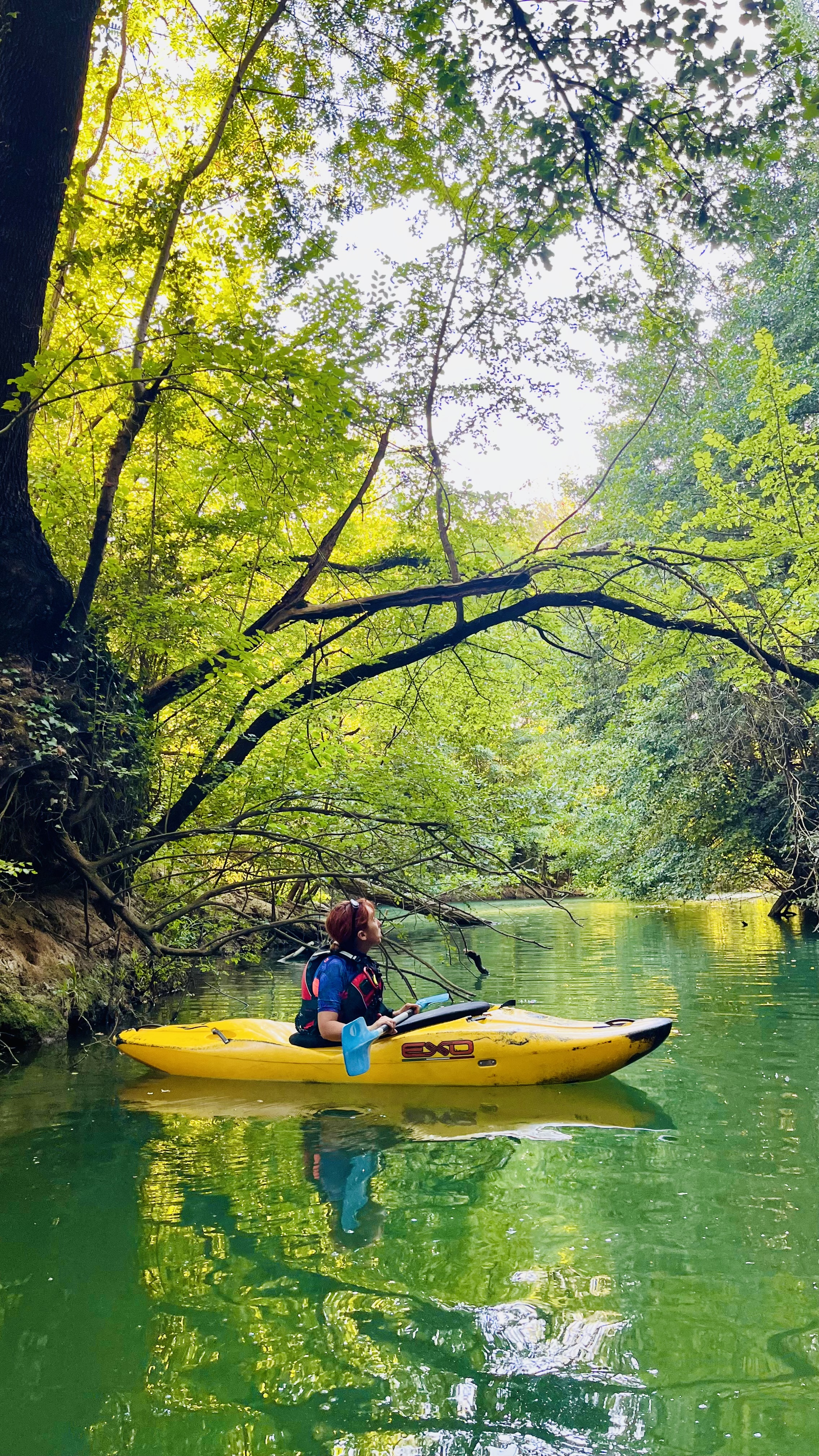
Paddling the Hérault at Pont du Diable means moving through an exceptional site — classified as a Grand Site de France, inscribed on the UNESCO World Heritage List and protected as a Natura 2000 zone. A privilege that calls for a few mindful choices, so this experience stays beautiful for you and for everyone who comes after.
1. Choose your time, not just your day
At around 9 in the morning, the Hérault still belongs to the birds. Crag martins skim the cliffs, grey herons fish in silence along the banks. Launching at opening time gives you an intimate encounter with the river, well away from the crowds.
Late in the afternoon, the light shifts and the heat eases. A paddle in the calm of the early evening is a different kind of pleasure — find a quiet stretch and simply watch the world slow down.
And if you can choose your dates: early June or late August. The season is in full swing, nature is generous, and the river is practically yours alone.
2. Come without a car
From Montpellier, a direct bus connects the city to Gignac. The hire base at La Meuse is less than 30 minutes on foot from Gignac town centre — a gentle walk through the valley that sets the tone before you even pick up a paddle.
If you prefer to arrive another way, the Maison du Tourisme et des Mobilités in Gignac, right at the bus stop, brings all your options together: LiO Hérault Transport bus lines, on-demand TADAM transport, car-sharing, bike hire and car clubs. One place to plan everything.
3. Zero waste on the water
One simple rule: whatever you bring in, you carry back out. No plastic in the water, no cigarette ends on the bank, no wrappers left on the pebble beaches.
On site, recycling bins are available before and after your trip. If you are bringing a picnic, we can lend you a waterproof canister to keep your rubbish with you throughout the outing.
Two extra steps that make a real difference in a Natura 2000 site: use a biodegradable sunscreen to avoid polluting the water, and opt for physical protection such as a UV-protective top rather than heavy sunscreen application. More effective, more sustainable, and better for both the river and your skin.
4. Watch without disturbing
The Hérault Natura 2000 zone is a sanctuary for rare species: crag martins, grey herons, black kites, European pond turtles. A paddle gives you access to a world that walkers on the clifftops never see. But that privilege is earned: approach slowly, let the conversation drop, listen and look.
A few simple rules: do not pick plants, do not move stones, do not touch animals. Keep a respectful distance (especially during the nesting season, April to July) and avoid unnecessary shouting or splashing in quiet stretches. A silent paddle will reward you with far more sightings than a hurried approach.
5. Choose a committed hire base
Choose club or family-run hire bases that employ local guides, know the river intimately and have been looking after it for years. On the Hérault, several organisations are actively involved in protecting the Grand Site de France and play a hands-on role in managing visitor numbers.
Our hire base is run by the Club de Canoë-Kayak de Gignac, and we commit to:
- capping the number of boats on the water each day to protect both the experience and the river itself
- working year-round to protect the site through our environmental education programme
- reinvesting your money in the local community by offering paddle sports all year long for young people, adults, seniors and people living with long-term conditions through the Pagaie Santé programme
What slow tourism really changes
Responsible paddling is precisely this: choosing to slow down rather than chasing thrills and becoming genuinely aware of the environment and the place you are visiting.
The Hérault is not an attraction. It is a living ecosystem, classified Natura 2000, that thousands of people pass through every summer without really looking.
Slowing down is not a constraint — it is a luxury, and the surest way to get more from the experience. The river reveals its secrets to those who take the time.
Frequently asked questions
Can I get there from Montpellier without a car?
Yes. LiO bus lines connect Montpellier to Gignac, where the Maison du Tourisme et des Mobilités brings together all the options for reaching the site: shuttles, bike hire and on-demand transport.What time does the hire base open?
The base is open every day from 9 am to 6 pm. We recommend the first hours of the morning to enjoy the site before the crowds arrive.Can I canoe outside the summer season?
The hire base is open from 1 May to 15 September. Outside peak season conditions are often at their best: calmer water, more wildlife to spot, a more peaceful atmosphere.
For group outings beyond these dates, feel free to contact us directly.
To paddle all year round, you can join the Club de Canoë Kayak de Gignac as a member.What do I do with my rubbish on the water?
We lend waterproof canisters on request. All waste comes back with you — recycling bins are available at the base on your return.