
You hand back the paddles. You're still a little damp. The Languedoc sun is beating down on the car park and you realise the day isn't over yet.
That's the advantage of setting off from Gignac: the water sports centre sits at the crossroads of one of the most richly endowed territories in the Hérault. Within an hour on foot or by bike — and just a few minutes by shuttle — you have a cave, a medieval village, a traditional market, a historic abbey, a potters' village... Here's how to make the most of it without a car, and how to build a full day around your paddle.
Exploring Gignac
Gignac's historic centre is well worth a wander, and the Saturday morning market alone is reason enough to make the trip from Montpellier.
The Meuse dam and the electricity museum
If you did the Gignac crossing, you've already drifted past it from the water. The Meuse dam, still in operation, has been feeding electricity to the local grid for over a century. The small adjoining museum traces the history of this hydraulic power station and Gignac's electricity network — a different angle on what you saw from the kayak.
The Saturday morning market
Every Saturday morning, Gignac's main square turns into a classic southern French market: local producers, Aveyron meat, goat's cheese, heritage tomatoes, sun-drenched fruit, olives and olive oil, oysters, and wine tasting. Afterwards, lunch on the square in the shade of the plane trees is a pleasure in itself. If you're planning a Saturday visit, arrive early to make the most of the market — the best tables fill quickly.
The clock tower and the historic centre
Gignac's heart has kept its medieval alleyways, its 18th-century private mansions, and its clock tower. An evening stroll is ideal when the village cools down. Or set off to discover the remnants of the old ramparts, the Church of Notre-Dame-de-Grâce, and the 14 chapels of the Way of the Cross.
Visiting the Grand Site de France
The Grand Site de France Gorges de l'Hérault – Saint-Guilhem-le-Désert brings together several remarkable sites linked by a free shuttle from the Pont du Diable. In summer it runs daily. It's the simplest — and wisest — way to sidestep the parking headaches at these very popular spots.
The Pont du Diable
If you've done the Pont du Diable canoe descent, you've already paddled beneath its arches. The view from the bank is quite different: you see the Romanesque arches, built in the 11th century, and the way the bridge sits within the limestone gorge landscape. The site is listed as a UNESCO World Heritage Site as part of the Routes of Saint James.
Saint-Jean-de-Fos and the Argileum
A pottery village since the Middle Ages, Saint-Jean-de-Fos still produces handcrafted ceramics. The Argileum, a living pottery museum, tells the story of this local craft through workshops and a permanent collection. Two kilometres on foot from the Pont du Diable — or a short shuttle ride — it's a calm, grounded stop between two more intense visits.
La Grotte de Clamouse
One of France's finest caves, listed and open to visitors, with aragonite formations of exceptional delicacy. The contrast with the heat of the garrigue outside is immediate: inside, the temperature holds at 17°C year-round. Allow an hour and a half for the full tour. Book ahead in high season.
Saint-Guilhem-le-Désert
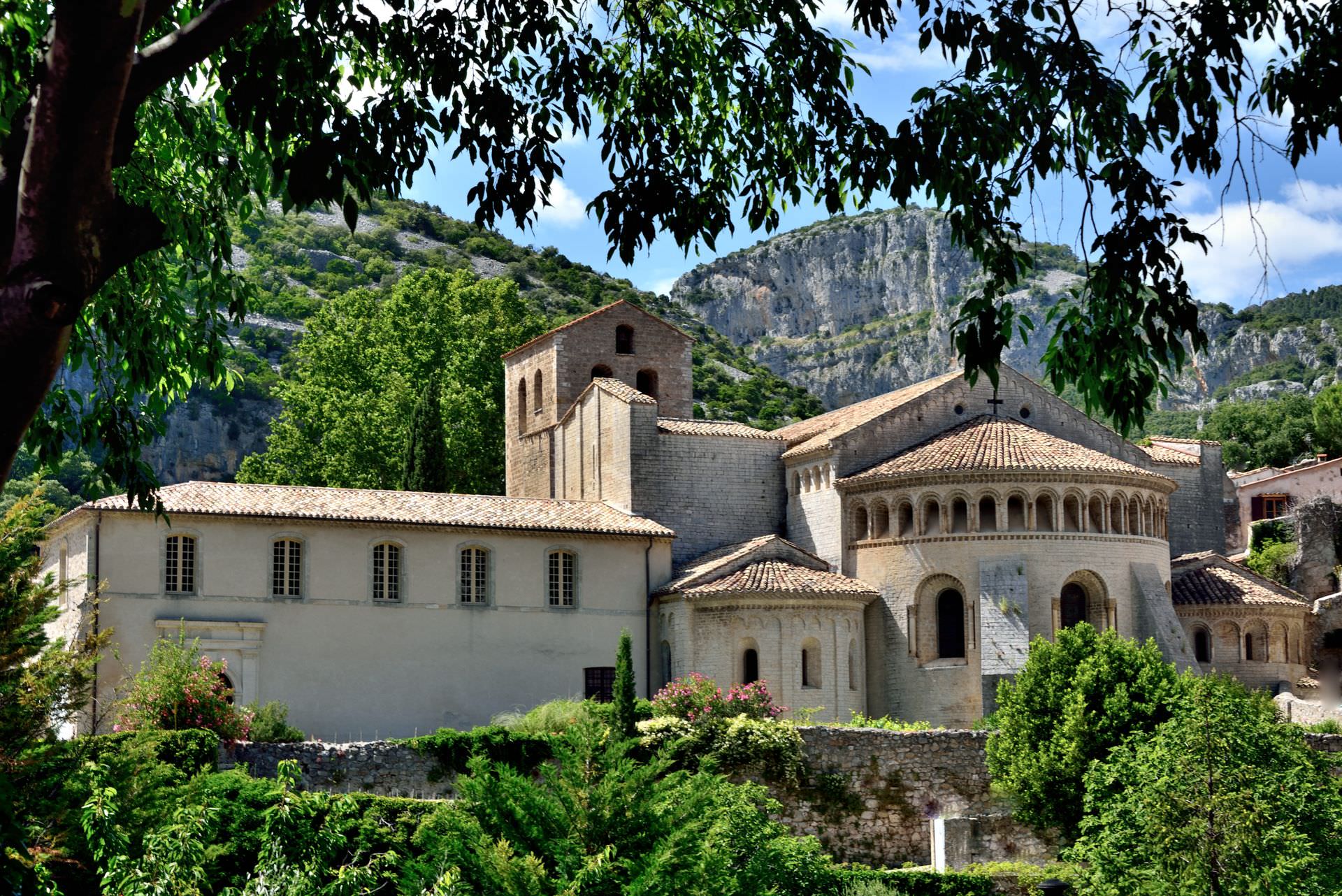
Listed among the Plus Beaux Villages de France (Most Beautiful Villages of France), Saint-Guilhem is built into a narrow valley at the end of the gorge. The Abbaye de Gellone, founded in 804 by Guilhem d'Orange, companion of Charlemagne, is inscribed on the UNESCO World Heritage List as a major stage of the Camino de Santiago. The village is small, the lanes are narrow, and it's best visited towards the end of the day once the coaches have left.
Planning your day
Two ways to shape your day, depending on what you're after.
Morning on the water, afternoon on the road
Set off early. The Pont du Diable descent runs between 9:30 and 11:00 (last shuttle departure). At that hour the water is cool, the light on the cliffs is beautiful, and the gorges are still quiet. You'll arrive at the Gignac base in early afternoon.
In the afternoon, take the Grand Site shuttle. The Pottery Museum, the Grotte de Clamouse at 17°C, Saint-Guilhem village at the end of the day when it finds its quiet again. Dinner in Gignac or on the square in Saint-Guilhem if you can find a table.
Morning at the market, afternoon on the water
If it's Saturday, start at Gignac market. Pick up something for a picnic on the water, or eat on the square or in the medieval lanes — take your time. Then head to the water sports centre for a Secret Meander on the Hérault, no shuttle, no timetable, at your own pace. Spend your afternoon on the water, in the shade of the trees, with plenty of swimming. Head back when it feels right, before 18:00.
This combination works well for families: the children have already burned off energy in the morning, the calm water of the Meander suits children from age 3, and nobody ends the day exhausted.
Getting to Gignac
From Montpellier without a car
Gignac is reachable from Montpellier by combining the tram and the coach. From Mosson station (the terminus of tram line 1), Hérault Transport coaches serve Gignac regularly. The journey takes around 35 to 45 minutes depending on connections. Once in Gignac, the water sports centre is less than thirty minutes on foot from the stop.
The Gignac multimodal transport hub — coach station, self-service bikes, connections to Montpellier, Clermont-l'Hérault, and the Grand Site villages — brings all your options together in one place. It's also where the shuttles to the Grand Site depart.
By car
Our water sports centre has a free car park. You can leave your vehicle there all day, head off on foot or by shuttle to explore the area, and collect your car in the evening.
Getting information on the spot
The Maison du Tourisme et des Mobilités de Gignac acts as a gateway to the Hérault valley and the Hérault gorges. It's the ideal first stop for everything you need to know about getting around and planning visits, with information on shuttles, timetables, Grand Site events, and local accommodation. If you're unsure about a journey or a visit, this is where they can help.