
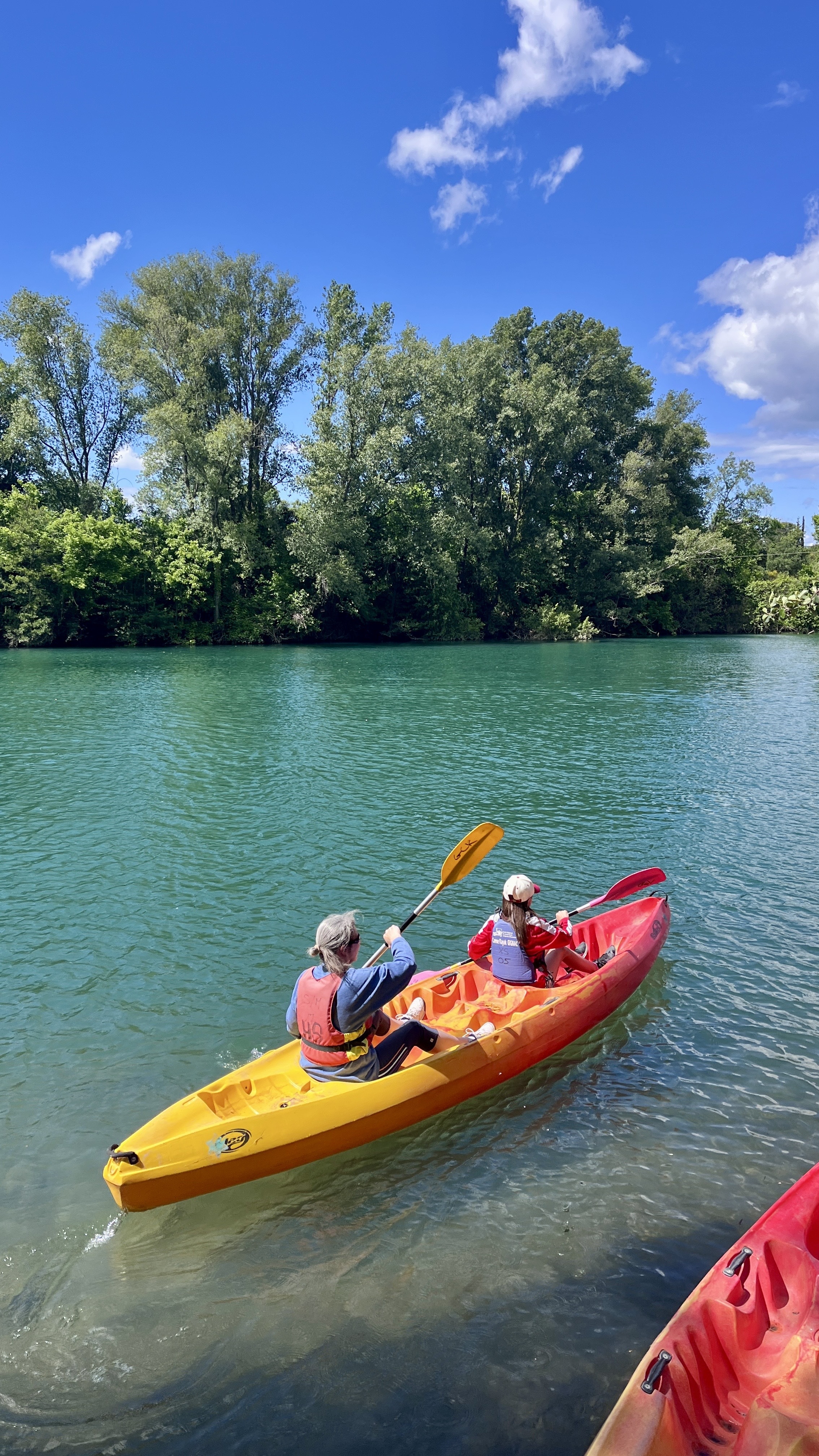
Planning a family canoe trip but wondering about age limits, safety, and what to bring? This guide answers everything — honestly, without scaremongering.
From what age — and with what gear?
The right age
Canoeing is accessible from age 3, provided children share a boat with an adult. Children under 10 must always be in the same canoe as at least one adult. A 3-person canoe fits 2 adults and 1 child under 10 — the ideal setup for young families. From age 10, a child can share a 2-person canoe with an adult.
Do they need to know how to swim?
No — and this is usually the first concern parents raise. On all our routes, wearing a buoyancy aid is compulsory for everyone, adults included. As long as the life jacket is properly fitted, swimming ability is a comfort, not a requirement.
Life jacket or buoyancy aid — what's the difference?
There are two main types of personal flotation device:
- Buoyancy aids (50 N): designed for calm water, they keep a conscious person afloat. Lightweight and comfortable, they are perfectly suited for flat-river paddling.
- Life jackets (100 N and above): these can turn an unconscious person face-up to keep the airways clear. Recommended for white water or open sea.
On the Hérault, we use approved buoyancy aids. They are provided and sized to each member of your family — from the smallest child to the tallest adult. There is nothing to bring: all equipment is ready at check-in, including child-sized paddles.
Safety habits on the water
Stay hydrated
On the water, thirst arrives later than you'd expect. The southern heat, the sun reflected off the river, and the steady effort of paddling all drain fluids without you noticing. After about 45 minutes of paddling, a hydration break is essential — especially for children.
We provide a waterproof dry bag with every boat so you can carry your water and sun protection throughout the trip.
Sun protection
Water reflects UV rays: exposure on a river is stronger than in the shade of a tree. The right kit: high-SPF sunscreen + long-sleeve top (UV-protective if possible) + hat + sunglasses. Most people apply cream at the start and forget to reapply after an hour on the water. Tuck it into the dry bag so it stays within reach.
Don't swallow river water
In hot summer conditions, lowland rivers can develop concentrations of cyanobacteria — naturally occurring organisms that produce toxins during bloom periods. The precaution is simple: avoid swallowing water and rinse children after swimming. Regional authorities publish seasonal water-quality bulletins; if an alert is in place, swimming is discouraged in the affected areas.
River hazards — and why not to fear them
Talking about river hazards without overstating them is the mark of a good briefing. Here they are, named plainly.
Rapids
Rapids are graded from 1 (gentle current) to 6 (unrunnable). Our Hérault routes sit firmly at grade 1 — calm or lightly rippled water with no technical rapids or drops. The liveliest sections are there to raise a smile, not raise the stakes.
Overhanging branches and willows
Trees leaning over the river occasionally create narrow passages. The approach: stay in the centre of the channel, duck if needed, and don't panic if the canoe nudges a bank. The current on our routes is never strong enough to create any real danger.
Bumping rocks
The Hérault has a rocky bed. Occasionally a canoe will catch a rock, tilt, or someone will need to step into the water to push off. It's startling the first time — and almost always harmless. The buoyancy aid cushions minor knocks and keeps everyone afloat if the canoe tips. A helmet is required on specific sections; if so, we tell you at the briefing and provide one.
Weirs and hydraulic structures
Dams, weirs and water diversions create localised currents that require care. On our routes, every structure is mapped. We explain at the briefing how to navigate each one — or where to portage around it on foot if needed.
In short: our routes are designed for families. The river deserves respect. It does not deserve fear.
Going further with the club
A rental trip is often the spark. For many children, it becomes the first chapter of a lasting passion.
The Gignac Canoë Kayak club, which runs the Canoë Diable base, is affiliated with the French Canoe-Kayak Federation (FFCK). It offers:
- Year-round training sessions on the Hérault and nearby lakes, for all levels from age 6.
- Introductory and progression courses in summer, for teenagers — and adults — who want to go further in a few days.
- Preparation for the first FFCK qualification: the Pagaie Blanche, which validates the fundamentals of safety, technique, and river awareness.
Contact us directly if you'd like to know more about the club's activities outside the rental season.